Skip to content
Visit Sunday
Explore Jesus
What’s On?
Sermons
Visit Sunday
Explore Jesus
What’s On?
Sermons
MENU
Latest Sermons
Apple
Spotify
Rss
Filter by Speaker
Alan Lukabyo
Alan Mugridge
Alan Thompson
Blake Hatton
Caroline Andrews
Colin Bale
Jake Fitzpatrick
Jamie Byrne
Janson Condren
Jeri Jones Sparks
Michael Figueira
Myles Elton
Owen Vaughan
Phil Mugridge
Rob Yemm
Sam Austin
Tyler Heesh
Filter by Book
1 Corinthians
1 John
1 Peter
1 Thessalonians
1 Timothy
2 Corinthians
2 Peter
2 Samuel
Acts
Colossians
Ephesians
Exodus
Genesis
Hebrews
Isaiah
James
John
Judges
Luke
Mark
Matthew
Philippians
Psalms
Revelation
Romans
God restores everything
Speaker:
Phil Mugridge
Acts 3:1-26
How it begins
Speaker:
Myles Elton
Acts 2:1-41
Expectant Witnesses
Speaker:
Alan Lukabyo
Acts 1:1-14
Easter Sunday
Speaker:
Alan Lukabyo
Luke 24:1-49
Who are you following?
Speaker:
Myles Elton
Luke 22: 29-62
Value & Service
Speaker:
Blake Hatton
Luke 22.1-38
Jesus’ Future and Mine
Speaker:
Blake Hatton
Luke 21:5-36
The Challenge of Authority
Speaker:
Caroline Andrews
Luke 20:1-19
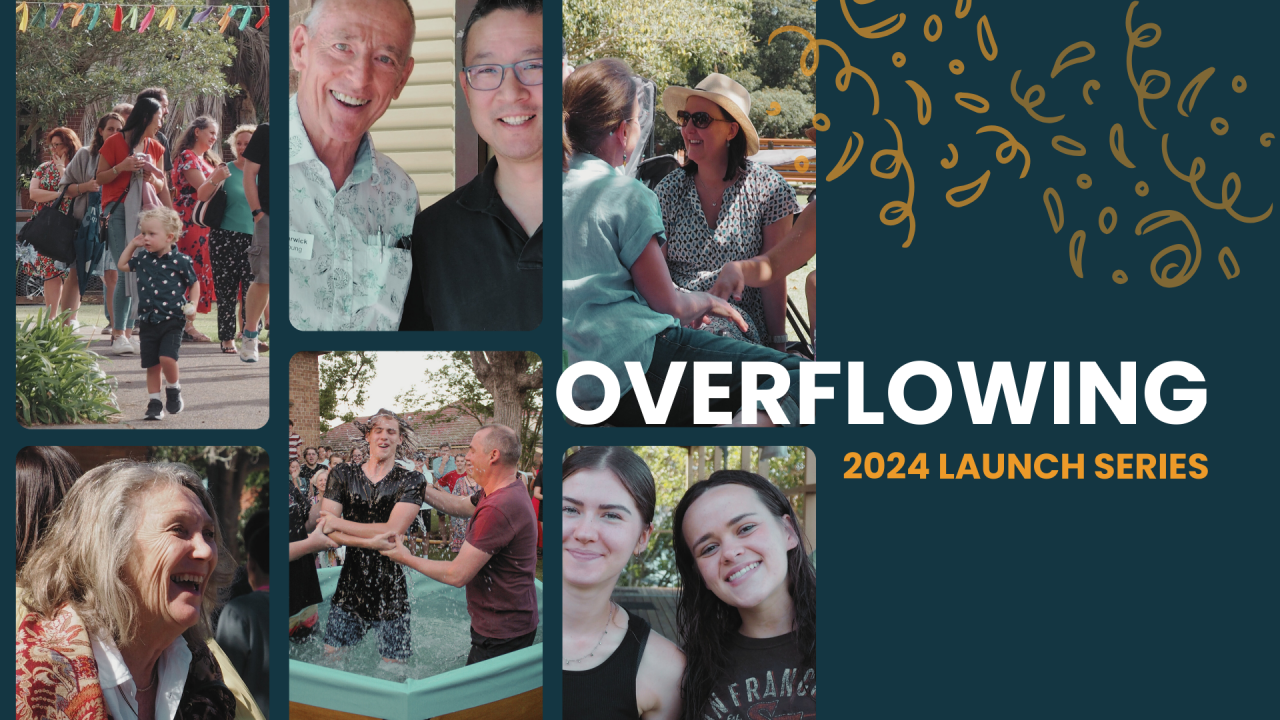
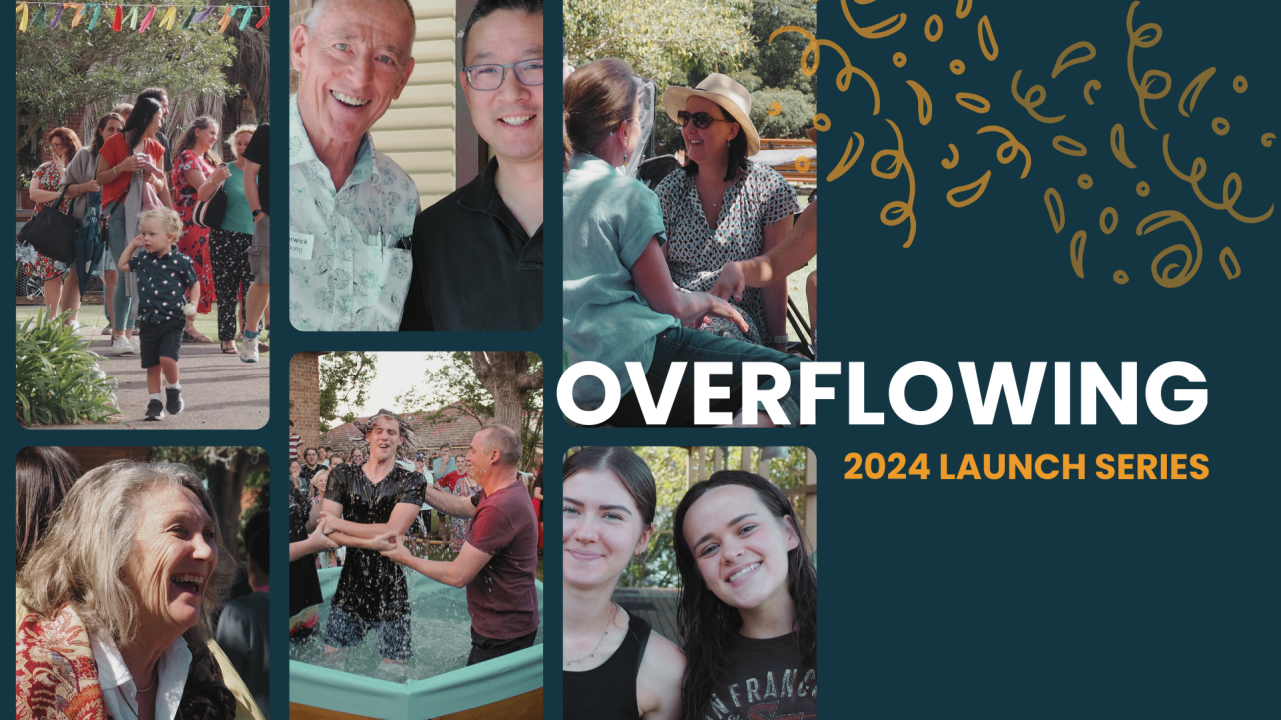
Overflowing Growth
Speaker:
Alan Lukabyo
Acts 5.41-6.7
Overflowing Joy
Speaker:
Alan Lukabyo
Philippians 1:12-18
Overflowing Church
Speaker:
Alan Lukabyo
Isaiah 55:1-13
Encounters with Jesus
Speaker:
Myles Elton
Luke 17:11-19
Encounters with Jesus
Speaker:
Jeri Jones Sparks
Luke 11:37-44
Encounters with Jesus
Speaker:
Phil Mugridge
Luke 10.25-37
Encounters with Jesus
Speaker:
Sam Austin
Luke 8:40-56
Load more
Browse by series
Encounters with Jesus
New Years Eve
Advent 2023
New Life Sunday
Witnesses wherever they went
Easter 2024
Overflow
The Beginning
Luke's Gospel
Living for a Generous God
Romans 1-8
Easter
Launch 23
2022 Advent series
The Revealed Heart of God
Partnership in Mission
1 Peter- Living Hope
Colossians 1
Belonging: What Church Means
Just As He Promised
Priorities 2022
Jesus: Greater Hope
Isaiah: Chaos and Comfort
Entrusted
St James Priorities
Facebook
Instagram
Youtube
About Us:
Our Beliefs and Vision
Our Team
Our Story
Contact Us
Hire Our Venues
Our Beliefs and Vision
Our Team
Our Story
Contact Us
Hire Our Venues
Connect with us:
Visit Sundays
Explore Jesus
Jesus Club
Croydon Mens Connect
Croydon Bootcamp
Visit Sundays
Explore Jesus
Jesus Club
Croydon Mens Connect
Croydon Bootcamp
Kids and Youth:
Kids
Youth
Outdoor Playgroup
Kids
Youth
Outdoor Playgroup
Stay in the loop:
What’s On
Join a Growth Group
Sermons
Resources
Elvanto
Give
What’s On
Join a Growth Group
Sermons
Resources
Elvanto
Give